
You supply quality fruits, handle orders, and keep your buyers stocked. But when someone searches for a fruit supplier in your area, can they find your business?
If you’ve been asking, “How to make my business show up on Google Search?”, start with two things: an accurate Google Business Profile and a website that clearly explains what you supply and where you operate.
For fruit suppliers, wholesalers, and distributors, these give potential buyers a way to discover your business, check your products, and contact you about an order. Here’s how to get started.
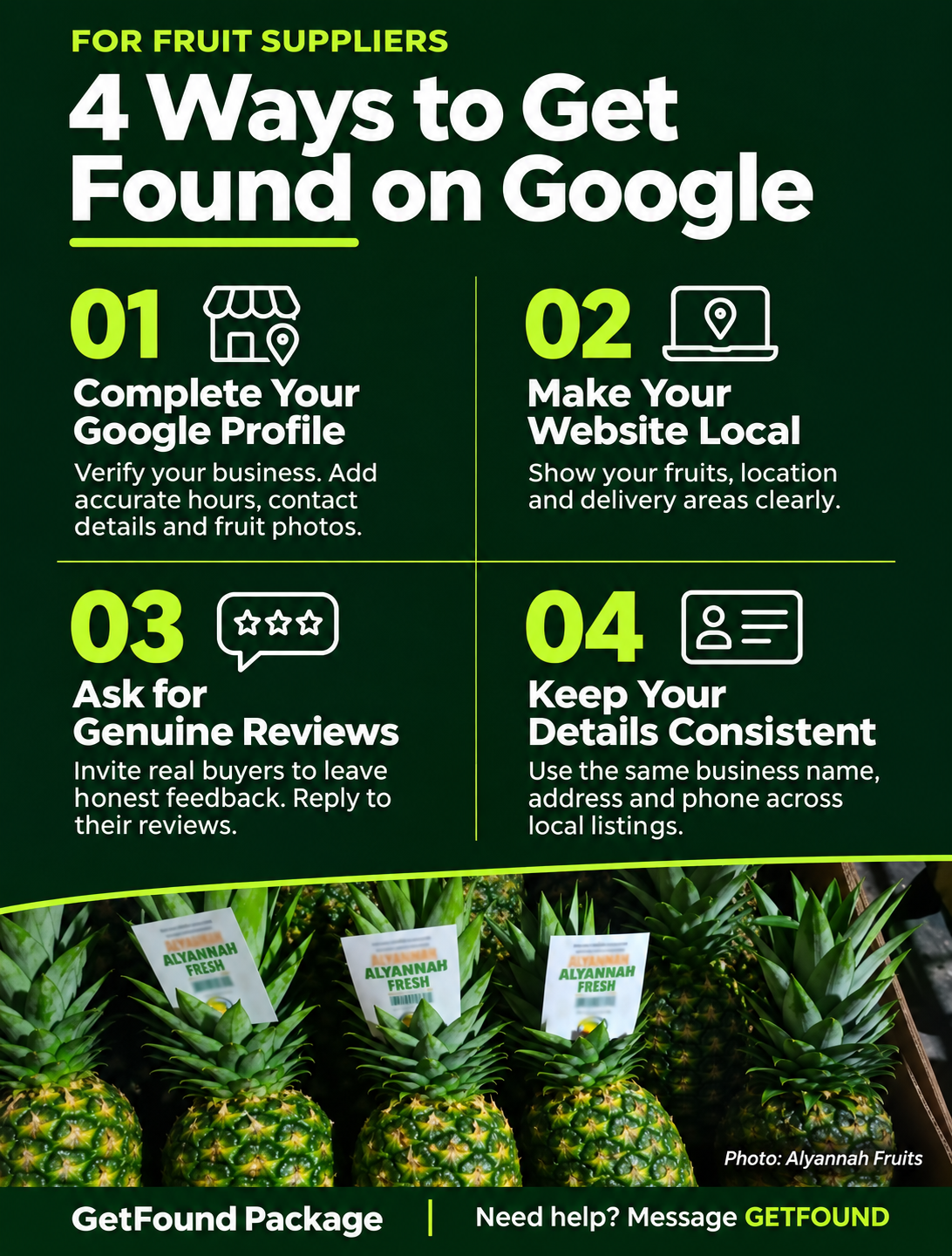
1. Check whether your business is already on Google
Before creating anything, search Google and Google Maps for your business name and city.
Your business might already have a listing. If it does, claim the existing profile instead of creating a duplicate. If someone else manages a verified profile, follow Google’s ownership-request process.
If there’s no listing, you can begin adding your business through Google Business Profile. Adding or claiming a profile is free. Follow Google’s instructions to enter your details and complete the verification options available to your business. Google explains the setup process here.
This is the first practical step if you’re wondering how to get business on Google.
2. Make sure your business qualifies for a Business Profile
A Business Profile is intended for businesses that meet customers in person—either at a location customers can visit or by travelling to their customers.
For a fruit supplier, that could mean a customer-facing wholesale location or a business that delivers directly to customers. An online-only business without in-person customer contact generally isn’t eligible.
Use your actual business name and accurate location or service-area information. Don’t add extra locations or keywords to make your business appear larger than it is. If customers don’t visit your premises, check the rules for displaying your address before publishing it. Review Google’s business eligibility guidelines.
3. Complete your profile with information buyers need
Think about what a buyer wants to know before contacting a fruit supplier:
- What fruits do you supply?
- Where are you based?
- What are your business hours?
- How can they reach you?
- Where can they learn about wholesale orders?
Complete the relevant profile fields with accurate information. Choose an available category that closely describes your main business, add your website and phone number, and keep your hours current.
Upload real photos of your fruits, packaging, and business operations. A buyer should be able to understand what you offer without guessing.
Google says complete, accurate business information helps it match businesses to relevant local searches. Read Google’s local visibility guidance.
4. Build a website that answers wholesale buyers’ questions
If you’re asking, “How to get my company on Google?”, a Business Profile is one part of the answer. Your website gives you more room to explain your products and supply arrangements.
For a fruit supplier, useful website content includes:
- Fruit varieties you supply.
- Wholesale ordering requirements.
- Your location and genuine delivery coverage.
- Real product and packing photos.
- A clear way to request pricing and availability.
Use specific, descriptive page titles. “Wholesale Pineapple Supplier in Davao” tells buyers more than a vague title such as “Our Products”—provided that description accurately matches your business.
Write for buyers first. Explain your offer clearly instead of repeating the same keyword throughout every paragraph. Google’s SEO Starter Guide recommends helpful content and descriptive titles that make pages easier to understand.
For example, a mango buyer may need to know your available varieties, packing options, and how to request a quotation. Answering those questions makes the page useful after someone finds it.
5. Check whether Google can find your website
Publishing a website doesn’t mean every page will immediately appear in search results.
Set up Google Search Console and verify ownership of your website. Use its URL Inspection tool to check important pages, such as your homepage and main fruit pages.
If a page isn’t indexed, inspect the reported reason. It may be new, inaccessible, or configured to prevent indexing. Address the issue before requesting indexing.
You can also submit a sitemap to help Google discover your pages. These actions support discovery; they don’t guarantee inclusion or a particular ranking. Google explains how to request crawling here.
This is an important distinction when learning how to get business on Google Search: a business listing and an indexed website are separate things.
6. Keep your business details consistent
Check the business information on your website, Google Business Profile, social pages, and relevant local directories.
Use the same real business name and current contact details. Correct outdated phone numbers, old addresses, and listings that send buyers to the wrong website.
For a fruit supplier, an incorrect number can mean a missed wholesale enquiry. Accurate information makes contacting your business easier, regardless of where a buyer discovers you.
Choose relevant directories that real customers might use. Focus on useful, accurate listings rather than signing up for every directory you find.
7. Ask real customers for honest reviews
After completing an order, invite the customer to share their experience on Google.
You can send your review link with a simple message thanking them for their business. Let them describe their experience in their own words.
Don’t buy reviews, offer discounts in exchange for reviews, or ask customers to leave only positive feedback. Reply professionally to reviews and address concerns when they arise. Google’s review guidance explains how to request genuine feedback.
For wholesale buyers considering a new supplier, customer feedback can provide useful context before they enquire.
How long does it take to show up on Google?
There isn’t one timeline that applies to every business.
Profile verification, website discovery, and ranking for competitive searches are different processes. Being visible when someone searches your exact business name also doesn’t mean you’ll appear prominently for “fruit supplier near me.”
Google’s local results consider relevance, distance, and prominence. You can improve your information and online presence, but you can’t guarantee a top position or pay Google for a better organic local ranking. Learn how local rankings work.
How to get your company on Google—and turn visibility into enquiries
Start with an accurate, verified Business Profile where eligible. Build a helpful website, check that Google can access it, maintain consistent listings, and collect genuine customer feedback.
Then measure what happens. Track website enquiries, calls, and qualified buyer leads. Ask which enquiries become customers so you can connect visibility with actual business results.
You don’t pay Google a per-click advertising fee for organic website visits. However, building and maintaining your website and local SEO still involves time and costs.
Need help getting your fruit business found?
My GetFound Package brings together website development, Google Business Profile optimization, local directory optimization, and enquiry tracking.
It’s tailored to fruit suppliers, wholesalers, and distributors who want local buyers to find their business and contact them more easily.
Message me “GETFOUND” to talk about your fruit business.